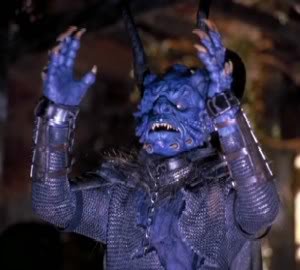
Wednesday, 22 January 2014

The Curse of Fenric written by Ian Briggs and directed by Nicholas Mallet


This story in a nutshell: The Doctor defeats an evil from before the dawn of time…

Master Manipulator: Since The Curse of Fenric is Sylvester McCoy’s penultimate adventure it is a good chance to see how he has progressed since Delta and the Bannerman, which I reviewed a short while ago. In some ways he has evolved out of all recognition becoming a much darker, brooding, melancholic sort of man, one with a plan up his sleeve for every occasion and has everything sorted before the story has even begun. It's something of a backhanded compliment to say that the Doctor might be a lot more interesting in this mould but Sylvester McCoy isn’t. McCoy is much more of a convincing performer than he is an actor and from listening to him on commentaries it is clear that he is a genuinely funny, entertaining sort of guy. But forcing him into the deadly serious role of the Oncoming Storm plays against his strengths and whilst there is the odd moment of dark intensity (his performance in Ghost Light is mostly sublime) for the most part we get McCoy gurning, spitting and growling his way through a histrionic script. So perhaps the Doctor has grown into a more responsible character but I feel that the material pushes McCoy too far and the result is an unbalanced, cumbersome performance. I genuinely believe the most natural performance we ever had from McCoy was in Delta and the Bannermen; dancing, running around the countryside and being sweet and gentle. The Doctor strolls into a top-secret military base and starts barking orders - he has certainly come a long way since pratfalling around in Time and the Rani. Is the Doctor the Prime Minister and Head of Secret Service at some point or is he just an excellent forger? He walks around the base at night time, quietly brooding and keeping secrets. His ‘eyes watching’ moment appears as though he is trying to be deliberately creepy, rather than simply making an observation. I love the gentler moments between the Doctor and Ace (such as when they wrinkle their noses at each other), McCoy and Aldred’s love for each other comes bleeding on screen. He gently ruminates over his family in a dark moment that proves that McCoy was at his best when kept quiet in the shadows rather than screaming his head off. The Doctor spitting ‘go!’ to the vampire girls comes across as exactly what it was, a children’s presenter trying to be scary. When the lead actor in a show can't even say a single word like that convincingly, we're in trouble. It's great to see that the Doctor draws his strength from his previous companions, although I would say that the moment isn't stressed enough (you'd have to be a real fan to understand the names that the Doctor is mouthing). It’s such a shame but McCoy completely fails to convince during the ‘evil since the dawn of time’ sequence – it's exactly the sort of speech that Colin Baker would have excelled at but McCoy simply does not have the gravitas or believability to bring such a portentous speech to life. It makes me worried that Ace should so readily be fooled by the Doctor’s condemnation of her character because it’s so sudden, improbable and preposterous. It gives the conclusion an emotional sting but given their unspoken affection everywhere else, isn't the slightest bit convincing. I think one of my problems with The Curse of Fenric is that the guest cast are so strong they rather show up McCoy and Aldred as amateurs and it is painful at times to watch them trying to match their standards.

Oh Wicked: On the other hand Sophie Aldred’s Ace has managed to somehow managed to deepen throughout Ghost Light and she seems perfectly comfortable with the more sombre material. She looks gorgeous in her period costume and its wonderful to get her out of that horrid badge strewn bomber jacket. Her relationship with Jean and Phyllis is very sudden, they meet and they are instantly the best of friends and having a great laugh together. If only life was so simple. I don’t like the way they overwrite her emotions all the time, when Ace discovers the baby’s name is Audrey she practically hurls her at Audrey. Once upon a time Ace would have dropped anything for a bit of excitement but now she’s thinking about people. She used to think she would never get married but now she’s not so sure. Finally Ace pulls the Doctor up on his manipulation of her and its great to see somebody finally take him on. The idea of her creating her own future and sending her mother to address she was brought in was lovely, very subtle but it's derailed by agonising moments of theatrics (‘I didn't know she was my muuuummm!’). Ace’s metaphorical baptism in the sea is perhaps a little too deep for Doctor Who but I appreciate the effort. Ace's scenes sit much more comfortably in this story than the Doctor's (except that dreadful 'wind whipping through my clothes' flirting scene) but the material stumbles towards the hysterical far more often than I would like. Some of the domestic drama is subtly played and at other times I felt as though I was watching a particularly hysterical episode of Eastenders. It's an odd mix, which appealed to me much more when I was a teenager (because they are all a little hysterical) but now I wish we could jettison the latter moments and simply enjoy the gentler ones.

Sparkling Dialogue: Amongst all the histrionics there are some brutally thoughtful moments and the dialogue has the ability to wind you on the odd occasion.
‘But whose thoughts will they think?’
‘There is a storm coming.’
‘I was hoping for something a little more, well…Aryan.’
‘How English. Everything stops for tea.’
‘Ah the sound of dying. When it comes to death quantity is so much more satisfying than quality.’
‘I feel this is what Dr Judson would have wished…’

The Good Stuff: The opening scenes feel like a movie in their scope and location work, Russian soldiers coming to shore through a mist swathed coastline. After Battlefield’s lousy production and the studio bound Ghost Light this feels like the expensive story of the season. Dinsdale Linden and Anne Reid create a fantastically nasty patient/nurse relationship with relatively little screen time. The soldier being stalked on the beach at night is some of the creepiest scenes of the era, an unknown presence pursuing him across the shingle. Nicholas Parson completely aces (hoho) his role as Wainright almost to spite those who might have doubted those that thought he didn't have it in him. There’s no hint of a game show host in this impressively intense performance. The vicar’s conflict of faith is the strongest character work on display in this tale, even if it did upset a friend of mine who couldn't quite get his head around the fact that a devout Christian might lose his faith during wartime. Given the atrocities that were committed I would have thought that was the one time you could justifiably lose your faith in humanity. There are some wonderful locations selected throughout the story including the sun blistered graveyard and the vertiginous cove overlooking the coast. Sometimes Doctor Who would pull some truly spectacular location work out of the bag and The Curse of Fenric is the best example of that in the McCoy era. The pull back to reveal Millington in his Nazi surroundings is startlingly dramatic. It says a great deal about his character before he utters a word. The effects of the runes writing themselves manages to be both simple but highly effective, especially in the special edition version. A natural source of lethal poisons, chemical warfare is a very nasty business and not the sort real world ugliness that Doctor Who dabbles in. That's commendable. One of the stronger ideas is the ULTIMA machine as bait for the Russians with a chemical bomb at its heart that will be used to poison Moscow once the war is over. I’d like to say Ms Hardaker is an overwritten religious zealot but unfortunately I have met a fair few Ms Hardaker’s in my time. We are treated to one of the iconic moments of the eighties when the Haemovores rise from the ocean. What is it about Doctor Who monsters rising out of water that tickles me so much? Is that really what we are going to evolve into thousand of years into the future, creatures with an insatiable hunger for blood? It's a grim portent of what will happen if the Doctor doesn't intervene in Fenric's plans in this story. The Haemovore attack on the church is very well staged, using the location to full effect and accompanied by a thrilling Mark Ayres score. Is this really the same Nicholas Mallet that gave us Paradise Towers? There is plenty of hysteria pretending to be drama in Fenric but Kathleen discovering her husband has been murdered is a real moment of tragedy that hits home. Linden’s Fenric is superb, a silky voiced villain with some wonderful lines.Just as people say about Jacobi's Master, I could have done with much more time with this unnerving villain. I find the rain lashed firing squad sequence a moment of winding realism. It really feels as though the Doctor and Ace's time has run out and they are going to be dispatched almost as an afterthought. How frightening are those vampire girls advancing on the soldiers in the tunnels after they have been shot in the stomach? Smoke pouring from their mouths, nails outstretched, Fenric grinning like a madman...Doctor Who hasn't pushed horror content like this for years. Nurse Crane’s death is very nasty because you know Judson and Fenric is enjoying it. Sorin carries the baton from Judson and makes a very different but just as terrifying version of Fenric.

The Bad Stuff: The script for The Curse of Fenric is troublesomely disjointed and cluttered as though Ian Briggs had a million ideas but no clue how to dramatise them. The storytelling really doesn’t flow smoothly, it’s like a needle in a record jumping over the place constantly adding new elements and not dealing with those that have already been presented. Joann Kelly and Joanne Bell both give two of the least convincing performances in the shows history (‘You should ave cum inta the water with us’ and ‘Ooh its like electrick!’). As London based evacuees I get that they are supposed to be as common as muck but this really is overstating the case - maybe it is a good thing that Ace never had the opportunity to sport a decent cockney accent if this would have been the result! They are also the least sensual vampires you are ever likely to meet, looking like the crowd that recently appeared on Channel 4's Benefit Street. I certainly wouldn't be enticed into the freezing cold English sea to sample their goodies. Nicholas Mallet is an odd choice of director for this piece given that his last work on this show was Paradise Towers. You have to wonder if JNT ever looked back on the work of his long term directors and judged what worked and what didn't and allocated them appropriately. I'm guessing not if the work of Ron Jones, Pennant Roberts and Nick Mallet are concerned. Whilst Mallet does pull off some surprisingly complex sequences, there is also a remarkably sloppy feel to some of the scenes in Fenric that occasionally feels like some fans took a camcorder out to a misty coastal village and decided to film their own Doctor Who story. Overall it would have been far more professionally shot had it been Alan Wareing or maybe even Andrew Morgan bringing it to life. The transition of scenes is very odd; there is nothing smooth about how the story leaps from one scene to the next (compare and contrast with Ghost Light) and there are some sudden reaction shots within scenes that you can tell have been filmed aside and inserted in jarringly. Whoever was editing the piece needed a crash course in his trade (and I'm not just talking about the hacked together story as originally transmitted, the Special Edition has serious, stuttering problems too). As good as the location work is it is such a shame it is shot on video because it looks far more like it has been filmed on a home video camera. Imagine how atmospheric this would be on film? We could have done without the excerpts of the parish records, which hold up the action interminably. Cartmel was a great ideas man but he wasn't always hot on cutting out extraneous material that slows down the action. I might be stupid but I never figured that Audrey was Ace’s mother when I first watched the story but I am reliably informed by everybody from my mother, my husband and several friends that it is significantly signposted as to make it obvious. There are too many co-incidences in the script, the Doctor and Ace discovering the body, Millington finding them in the crypt. Why does the Doctor start talking in cod Norse mythology…who on Earth would start a conversation like that? The vampire girls in the water should have been really scary but their obsession with their nails distracts from their generally ghoulish appearance. How on Earth did Ace work out that the encryptions are a logic diagram for a computer programme? Characters make the most random of conclusions to push the plot forwards. Unfortunately after their dramatic reveal the Haemovores stroll along the beach like geriatrics on a day trip along Eastbourne front. The references to Judson’s accident are irritatingly vague, why introduce plot elements like this if you aren’t going to follow it up and give us some sort of explanation? Why does Ace pick up the flask and why doesn’t she mention it? There are some dodgy POV shots on the Ace's climb up the church tower. Where does the romance between Sorin and Ace come from – like her friendship with the girls it is taken as a given after their first meeting that these two are deeply in love when no time has been given to make this even slightly plausible. Lust at first sight? Why does the Doctor chastise Ace for carrying explosives when they come in handy in Remembrance (blowing up the Dalek in the junkyard), Silver Nemesis (destroying the Cybership), Battlefield (‘Ace we need a hole’) and here? How precisely does faith work as a deterrent against evolved human vampires?  Ace’s cod existentialist dialogue when flirting really makes me vomit, why doesn’t she just snog him? One of Doctor Who’s ugliest moments comes when Wainright is killed; it’s the death of faith. What the hell is Millington talking about at the end of part three? It's astonishing that they would hire an actress of Anne Reid’s calibre and not give her anything to do after her first few scenes. If Fenric is such an ancient evil why didn’t the Doctor kill him when he defeated him? He had no trouble destroying Skaro in Remembrance. There is a whole army of vampire girls with stupid nails and red lippy…Simon hates that ridiculous scene. Melodramatic shrieking does not substitute genuine drama and there is plenty of the former in the last episode (‘Haaaaaace!’ 'I didn't know she was my maaaaaaaaam!'). As Simon pointed out to me the solution of the pawns working together makes no sense whatsoever. Whenever Fenric gets mentioned he always brings up the nonsensical conclusion. The Great One is another element added to an already crowded script. He comes with complicated and nonsensical explanations of a paradox where he poisons the oceans and creates his own future. How did Fenric manipulate anybody when he was trapped inside the flask? Did he really set all this up just so he could beat the Doctor at chess? Why such a convoluted answer to explain Ace’s embarrassing time storming backstory? I prefer to think of it as an accident. What is the point of the chess set in Lady Peinforte’s study? This 'arc' is as made up and narrative strangling as one of Moffat's! ‘He can’t penetrate Ace’s psychic force!’ – Fenric is occasionally adult enough to let us figure out things for ourselves...and occasionally feels like it has to point out the obvious. Surely if the Great One kills Fenric and doesn’t release the chemicals then none of this should have happened and the Haemovores shouldn’t exist? What is Millington’s motivation? Why does he go from investing so much into trying to plan the next fight with Russia and then on a sixpence decide that everybody is fair game?

The Shallow Bit: Of all the babes of the McCoy era Sorin is possibly the best looking. I never could resist a man in uniform. The soldier that Ace flirts with is another hottie. This story certainly doesn't scrimp on eye candy.

Result: I don't want you to get the impression from the section you have just read that I am not a fan of The Curse of Fenric. It is a frustrating story because it comes with a shopping list of problems but its better moments are so good that they automatically elevate it to something that is way above average. It has trouble juggling it's shopping list of plot elements but gets some of them so very right it is hard to argue with those people that consider this the best story of all time. The characters are vivid and (mostly) played to perfection, the production is packed full of terrific location work, action sequences and genuinely thrilling and scary moments. However it feels like this story is continually throwing things at you until you submit...curses, ancient evil, war, poisons, vampires, paradoxical mutations, domestic drama, politics. It’s a remarkably sloppy piece of writing, proof that if complicate things needlessly you tie yourself into knots of illogic, poor motivation and unanswered questions. And yet the dialogue is frequently excellent and delivered by such strong actors it almost makes you forget how slapdash the narrative is. The Curse of Fenric has a fantastic number of resources which it uses well and Nicholas Mallet's decision to take the story out on location was the best one he ever made when helming a Doctor Who story. The last episode in particular is the most exciting and slick single piece of Doctor who since the last part of The Caves of Androzani, furiously paced so that you are left clinging onto its coattails. A flawed piece of horror that provides a thrill ride on a scene by scene basis but doesn’t hold up to serious scrutiny: 7/10

Sunday, 19 January 2014

Ghost Light written by Marc Platt and directed by Alan Wareing


This story in a nutshell: In the words of Andrew Cartmel ‘There’s an alien spaceship and it has a crew of three people. The entity in charge is called Light and he is on a galactic expedition to survey and catalogue life like an intergalactic Charles Darwin. He’s got two crewmembers and one of them is Josiah who is the survey agent. When Light lands on a planet he sends the survey agent out both to gather details and to become an exemplar of the dominant lifeform on the planet. He literally evolves into a specimen of life on that planet. There’s another crewmember who stays on board and controls the experiment, that’s Control. Her role is to sit on the spaceship and do nothing which drives her loopy. She turns the tables by escaping in Ghost Light and she too starts to evolve. Light and his crew had already visited the Earth a lot earlier and picked up a specimen of Neanderthal man, Nimrod. When they returned to Earth there had been a mutiny on board the ship and Light had lost control of his crewmembers. The came back to Earth because Josiah, the survey agent liked Earth and wanted to return to it. They take control of the household, bump off the head of the household and take control of Gwendoline and Mrs Pritchard. The Husks are remnants of Josiah that he has left behind since returning to Earth in his attempts to become a Victorian gentleman. When Josiah evolves he casts off his husks the same way that some form of reptiles do.’ Doesn’t that make perfect sense? What do you mean they didn’t explain any of that in the transmitted story?

The Real McCoy: Sylvester McCoy’s greatest turn as the Doctor bar none. He walks out of the TARDIS with an air of mystery, playfully trying to make Ace figure out where they are knowing that she will be horrified when she finds out. He cuts a playful figure on the rocking horse, eyeing her furtively. He even asks if she has told him about Gabriel Chase, knowing that he has brought her here on purpose. He has definitely become a Doctor of mind games. When he says it is time to emerge I’m not sure if he is talking about his role within the unfolding events or to reveal his deception to Ace. Either way he is very aware that he has a part to play. The scenes between McCoy and Aldred after she realises where she is are the best acted moments either of them ever gave to Doctor Who. Ace can barely contained her rage but manages to speak with a restrained fury and the Doctor is purring with sympathy as he shows new dimensions to his character. Together they discuss something that is worth discussing, facing your fears and the horrors of racism. Its totally unlike anything that has come before and refreshingly takes both characters to new depths. The way he purrs ‘the nature of the horror that you sense here…’ is so menacing you might think that the Doctor is the villain for a second. I love the way he compliments Ace on her dress. He’s like the puppet master orchestrating his own live theatre in the way he gets everybody in position in time for the second cliffhanger and the reveal of Light. McCoy almost threatens to undo all of his good work in this story when he attempts to snarl at Light and even Sophie Aldred is astonished at how his performance suddenly plummets – look at her in the background fearing that he might spontaneously combust with anger. The Doctor growls that even he can’t play this many games at once, for the first time admitting that he finds all this horror a game. He has great fun sending Light into a spiral of confusion by mentioning a menagerie of fictional creatures he has failed to catalogue. As Light says he is unceasingly mischievous and loving every second of it. As I have made abundantly clear in the past, I generally prefer the quirky mad professor seventh Doctor from season twenty-four than his latter, darker alternative but Ghost Light proves that given the right material and the right actors to play with (this cast is so strong it automatically forces McCoy to up his game) he could make the master manipulator a compelling character and not just come across as a performer trying to act.


Oh Wicked: Perhaps she’ll evolve into a young lady…’ Ace and I have been on such a journey together I feel as if we were once great mates but somewhere along the line the friendship has drifted and come to its natural end as friendships have a habit of doing. One of my first memories of Doctor Who was the end of episode two of Battlefield where Ace is drowning in the airlock of the ship as the credit strike. At the age of nine I was distraught and burst into tears and wanted to know if ‘the girl’ would live much to my sisters derision. Moving on a few years and Doctor Who was over but I was finding out much about the classic series but none of the companions could measure up to cocky, baseball bat wielding Ace. I remember trying to draw her face from the Target novel of Dragonfire for a school project. I’m not sure I could pinpoint where it all started to go wrong but the further we moved on from the eighties the more dated her character seemed to become with her cod ‘wicked’ dialogue and massive ghetto blaster. She seemed an embarrassing reminder of the past in a way that the other companions like Liz and Sarah never did. Then Big Finish came along and Sophie Aldred started taking part in the audios and I couldn’t believe that they were trying to pull off a seventeen year old girl being played by a forty plus year old woman. It didn’t help that Aldred was stiff and unconvincing on audio compared to her youthful, charismatic performances on the telly. I met Simon eleven years ago and over time he has caught snippets and episodes of most companions and declared that Ace was his least favourite – it was everything about her from her lack of a cockney accent, her hideous dialogue, the angst and melodrama and the fact that she was saddled with McCoy. Over 20 years Ace went from being the best female character to grace the television in my eyes to a embarrassing outdated youth stereotype and one that that refused to go away. My point for this little exercise is that whilst the majority of my opinion of her character veers towards the latter (especially in stories like Dragonfire, The Happiness Patrol and Battlefield) Ghost Light was the final recorded story and throughout the three episode the writers, script editor and Aldred herself have all started to come together and the character was starting to really work. It’s a shame that they were cut off in their prime but in this story especially there is a glimpse of an Ace that I really like – feisty, thoughtful, frightened and brave. And Aldred underplays most of the story to her credit. For one story she feels like a real person and that is some trick to pull considering everything that is going against her.

Poor Ace wanders from the TARDIS with childish enthusiasm, excited that the Doctor has trusted her to figure out where they have landed and completely unaware that he has tricked her into facing her past. There is a lovely moment where the Doctor calls Ace ‘Eliza’ but I think Professor Higgins would have given up on this one. She talks about getting a job at Sellafields (a nuclear waste decommissioning plant) because she thinks it might be safer. Despite visuals that tell you so I was only convinced that the events had taken place overnight when Ace fell asleep in the chair. Platt enjoys taking the mickey out of her retro dialogue and the ‘Cholesterol City!’ ‘Oh no dear, Perivale village’ made me chuckle. Alan Wareing captures the horror of Ace burning down the house with the simple touch of a flashing fire engine light as she is attacked by the house that she destroyed. It's genuinely nightmarish. There is nothing like a good bitch fight and Ace and Gwendoline go hell for leather, rolling around on the floor and tearing at each others dresses. If I was otherwise persuaded it might get me hot under the collar! Unlike Battlefield, this time it helps when Ace is highlighted against another female character and her relationship with Control (Sharon Duce emerges in a triumphant performance in part three) is all the funnier for her taking on the Professor Higgins role and teaching her how to speak proper like. It's lovely that Ace has one secret that the Doctor doesn’t know about and the revelation that she burnt down Gabriel Chase in 1983 is the big revelation that third episode needed.

Sparkling Dialogue: ‘Let me guess; my theories appal you, my heresies outrage you, I never answer letters and you don’t like my tie!’
‘I can’t stand burnt toast. I loathe bus stations. Terrible places. Full of lost luggage and lost souls. And then there’s unrequited love. And tyranny. And cruelty. We all have a universe of our own terrors to face’ – this is the 1989 version of the ‘evils must be fought’ Troughton speech in The Moonbase with much more poetry.
‘I perceive you are a sick man, sir. Divine retribution for your blasphemy perhaps?’
‘Scratch the Victorian veneer and something nasty will come crawling out!’
‘The Cream of Scotland Yard’ – along with Reverend ‘Monkey Boy’ Matthew this is one of the sickest, most ingenious gags in the shows history. Turning the good Inspector into primordial soup from which humanity evolved out of. Black humour doesn’t cover it.
‘File under: Imagination, lack of.’
‘Take off? They’ve gone, like a passing thought. As long as their minds don’t wander.’

The Good:
· Many people have reflected on the design of this story and I have to join the crowd because it is a magical recreation of a Victorian house with some ghoulish gothic touches. The hallway in particular looks majestic with the wood panelled staircase dominating the set. The clock chimes and there is a freaky sequence as the house seems to come to life, maids sliding balletically from the wall panels and Gwendoline, hypnotised by the fire, rising to greet her guests. The designs really are stunning with each set bursting with things of interest to look at – a cabinet full of treasures, deer/boar/zebra mounted on the wall, swords, lizard skeletons, organs in jars, birds stuffed on perches, an imposing portrait of Queen Victoria, butterflies in cases, beetles and bluebottles in the draw (a policeman in the draw, that’s bloody funny!). The stress on dead things allows the director a chance to give the impression that the house is coming to life as the bugs start crawling from the furniture. I can remember being very excited about the crypt like spaceship sets too with the giant pulsing light in the middle as thought it were alive. Design on Doctor Who hits it's peak just as the show is put to rest.
· When Ace asks if this is an asylum with the patients in charge she may well have a point but there are gloriously oddball characters such as Redvers Fenn-Cooper wandering the house; his mind broken, trying to find himself. Scenes of him bound in a straight jacket as lightning screams through the window and a snuff box comes to life are as inexplicable as they are chilling.
· Sylvia Simms really makes the most of a part that could have been completely forgettable, making Mrs Pritchard one of the most violent and disturbing characters in the show. She almost breaks Fenn-Coopers arm, drags Ace away by her pony tail, chloroforms Matthews as though she is swatting a fly and abusing her daughter. Even when she runs off with the grief of realising what she has happened to her family she still has an air of menace as she tells Gwendoline they are both lost.
· You couldn’t with all good conscience call Mark Ayres music for Ghost Light incidental but that doesn’t stop it from being one of the finest scores the show was graced with (and with the soundtracks to the McCoy stories now available this is one of my most listened to of the era). One of my favourite tracks is the exotic excitement drummed up as the Doctor faces Redvers and his gun. It just needed a better dub so the music doesn't obscure the music quite as much as it does. It almost feels like a dry run for Murray Gold's music.
· I love all the illusions to Darwin. Doctor Who has often explored some very intellectual ideas, be they scientific or historical, in a very fun way and this is a really quirky way of exploring the theories of evolution. Touches such as Josiah suggesting that Gwendoline has undergone a metamorphosis because she and Ace are wearing gents clothes are very creative. Intelligent, creepy conversation around a Victorian dining table is not what I have come to expect from an action adventure show like Doctor Who but that just makes it all the more welcome. Matthews dismissing the theory that we evolved from apes and then being transformed into a hideous parody of one is the sickest joke ever played on a Doctor Who character, very dark and very funny. Then you have Light having something of a nervous breakdown because he is trying to catalogue a planet that is continually changing and evolving.
· I can think of very few Doctor Who villains that creep me out more than Ian Hogg as Josiah Smith. The very image of him is disturbing with his dark glasses, grotesquely peeling face and dirty suit but Hogg chooses to play the role in a drunken, unbalanced way which left me uneasy when he was on screen. Watch as he caresses Gwendoline and draws his scabby face close to hers, seducing her into killing Ernest Matthews and gurgling with laughter as she does so (Alan Wareing having the cloth approach the camera to block out his face is a gorgeous moment of direction). He’s just horrible. The rungs in his evolutionary ladder are snapped when his husks heads explode – if there was ever a visual metaphor for the mind breaking I haven’t seen it.
· Reading the John Nathan-Turner Memoirs it would appear that the monsters were included because by all accounts this would be the last Doctor Who story ever made and he always associated monsters with the programme. It might have been brave to have left our screens with some of the most loathsome human monsters we have ever seen (the Matthews chimp, Josiah and his flaky face) but there is no doubting that these two hastily cobbled together monsters look very striking.
· Nice shades of Phantom of the Opera with Control trapped underground with her visage hidden.
· I might be the only person to think this but I find Light quite creepy because of his overt campness and delicacy. There is something discomforting about an angel that removes a woman’s arm because he wanted to see how she worked, turn a man into soup because he wanted to know where he came from and wants to destroy the world simply to keep his catalogue up to date.
· Again I might be the only person to appreciate it but I love how this story builds to the biggest anti-climax in Doctor Who history. The way the Doctor so causally says ‘explode or fly’ makes me howl with laughter. We expect a climactic ending so Ghost Light pretends it is leading somewhere terribly exciting but it is all smoke and mirrors to cover the fact that all that is happening is the equivalent of a car leaving a garage. One last joke that works a treat.

The Bad: I’m clutching at straws to find something bad to say about Ghost Light but I wasn’t convince by the POV shot of Control where she bashes Nimrod over the head in part one. Ace’s ‘white kids firebombed it!’ comes dangerously close to her previous annoying dialogue – talking about racism is a very worthy thing for Doctor Who but this coming dangerously close to being racist but on the other side. When in doubt, be subtle. I found Inspector Mackenzie’s racist comments to be far more believable because they were rooted in solid, period dialogue (‘Gypsy blood I can see it in him!’).

I had a stage in my life when I tried to get my friends to watch Doctor Who with me. The sad truth of the matter is that I was never going to get them to fall in love with it the way I do and so the exercise was fairly redundant. In the end we wound up watching the stories that are considered disasters in fan lore (The Chase, Time and the Rani) and having a wonderful time sending them up. The closest I got to convincing somebody that this show really was brilliant was my friend Luke who watched the first two episodes of Ghost Light with some enthusiasm. However it all fell to pieces in part three when Light was revealed and he stepped from the lift as camp as Christmas. Luke fell about laughing and never recovered from his mirth. To this day he still opens every text conversation, email and Facebook message with ‘look at these microbes…’ Now the only person who has to put up with my Who obsession is Simon but he was stupid enough to marry me.

The Shallow Bit: It doesn’t matter whether Sophie Aldred is wearing a strapless top, squeezed into a gentleman’s suit or walking Gabriel Chase in a white silk dress – she looks gorgeous at every stage.

Result: The first episode of Ghost Light is one of the best of the classic series and has plenty of atmosphere, evocative design, intelligent discussion, strong performances and a great monster reveal. Not bad for the final classic story ever made. Doctor Who has often boasted a stunning cast of well known actors but Ghost Light is the crème de la crème and they have great fun bringing to life a household of sinister grotesques and enjoy the delicious dialogue. I find it astonishing that Battlefield and Ghost Light could be transmitted back to back because the gulf in quality between them is about as cavernous as you can get. In taking an oddball approach to telling a story and running with it Ghost Light really isn’t that different to Paradise Towers but what puts this into a whole different league is a director who is absolutely in tune with the script and the designers who are clearly turned on by the possibilities the location offers them. It perhaps needed one more episode to make the explanations sharper but this is one instance where I wont underscore through lack of clarity because the finished result is too polished and enjoyable with great directional touches by Alan Wareing. This should have been transmitted last because it would have been an electrifying finale for the season and a brilliant two finger salute to all those fans that had slagged of JNT so mercilessly: 10/10

Saturday, 18 January 2014

Battlefield written by Ben Aaronovitch and directed by Michael Kerrigan


This story in a nutshell: The Earth is dragged into a war that doesn’t even belong to this dimension!

Master Manipulator: When people declare that the 7th Doctor’s era is the nadir of televised Doctor Who they have probably just watched McCoy’s performance in Battlefield. It hurts me to say this because I never like to admit that the central character is ever an embarrassment but this really is about as bad as it gets. This is not just McCoy bashing, I will cite examples and explain myself but McCoy simply cannot play anger or fear convincingly and he spends quite a bit of this story doing ridiculous pratfalls. Trying to suggest this gurning fool is Merlin is an insult to the Arthurian legend. The one thing that really shines through well (despite some painful dialogue) is his unspoken affection for Ace, I’ll give him that. He gets very excited about going to an archaeological dig (he and Benny will get on fine!). He pulls out his UNIT pass to try and force his way in despite the fact that it still has Pertwee’s mug on it! I really liked the talk about the Doctor changing his appearance being a disguise; the story could have done with more of that kind of innovation. McCoy doesn’t have the talent to convince when he is threatening Mordred, he spits and struggles with the dialogue. McCoy is extremely adept at popping crisp packets whereas he completely fudges his agonising attack when Morgaine first appears and that’s because he is a good children’s entertainer and not a terribly good actor. The Doctor can hypnotise people to his will, I can only think of a hundred other times where that might have come in handy. It’s a typical Cartmel innovation, super powers that are used and then forgotten (one finger can be a deadly weapon). At one point he actually turns to the camera and says ‘Ace, what have I done?’ which I thought was as low as his character would sink but then he growls unconvincingly ‘Morgaine! If there dead…!’ This pure pantomime material. We get our once a story ‘Haaaaaaaccceee!’ which Simon always cites when he wants to remind me how much he hates this era. Why he insists on screaming her name when his companion is only a foot away baffles me. Leaving notes for himself to explain the plot is such a lazy plot device, it is exactly the sort of clever cleverness (but not actually that clever at all) that has infected the series of late. The Doctor’s final heart rending speech to McCoy is scuppered by McCoy’s hideous, gabbled delivery. This story would be improved exponentially with a more commanding actor in the role.

Oh Wicked: And I thought the characterisation for the Doctor was bad enough…Ace’s is ten times worse! Whilst it is nice to see Ace pairing up with a young contemporary character their relationship isn’t even slightly believable and the dialogue for both characters beggars belief. Thinking about it plausibly for a moment who on Earth would go about with explosives in a rucksack and call themselves Ace? I can make some pretty big leaps but that’s quite a hurdle you have to make before you reach the appalling slang and embarrassing attempts at cool. She is so unconvincing, boasting about her explosive actions at school and where any sane person would politely retire and get as far away from her as possible but fellow pyrotechnic junkie Shou Yuing seems to love it. Wouldn't Ace be locked up in a remand prison for young adults if she really let off explosives at school? When she’s under pressure her own racism slips out, an interesting aberration given her expressed of people with xenophobic views. ‘Looks like Colonel Blimp has a fancy taste in hardware’ – Ace’s dialogue is frequently painful and chokes Sophie Aldred of any credibility. I wish she had been allowed to play the character as a cockney, Aldred's middle class accent doesn't marry at all well with the dialogue. It’s a shame because both the character and the actress (especially the actress) can be very good (go and watch Ghost Light) but this is the norm with Ace, hideous hip language and false bravado. As much as I complain about Tegan (and even Peri in her whinier moments) neither of those two characters can touch Ace in the embarrassment stakes at her worst. And this is her worst.

Colonel Blimp: Finally I can say something nice! Whilst the Brigadier does have some questionable moments, Nicholas Courtney is such a seasoned pro at this by now he can make pretty much anything sound good. The Brigadier has done alright for himself, bagging the fabulous Doris (a charming woman) and a gorgeous house in the country. I would have no complaints if I was in his position at his age. He has retired and decided to fade away, the only think that can tempt him to put on the (ill fitting) uniform is mention of the Doctor. Bureaucracy according to the Brig is ‘inch thick forms and half a pint of blood’. Once his helicopter is shot down and destroyed he begins to enjoy himself, the old daredevil. It’s really nice that he recognises the Doctor: ‘Who else would it be?’ It doesn't matter which actor is playing the part, Courtney seems to find a way to relate to them (check out his chemistry with Colin Baker in the Big Finish audio The Spectre of Lanyon Moor as well). The Brigadier is a bit rubbish with the ladies, it’s not really his thing but at least people will be shooting at him soon. UNIT looks after its own, alive or dead, a lovely touch excised from the transmitted version. He is steeped in blood. Such a brainless thug at times, he pumps bullets into the Destroyer without thinking about his actions and the capabilities of his opponent. He thinks he is too old for this malarkey and wants to go home to Doris and leave the action to young kids like Ace from now on. What is really highlighted in Battlefield is that the Brig is the Earth’s protector: ‘Get off my world!’ A role that he was born to play.

Sparkling Dialogue: Yeah, that’s a good one.

The Good Stuff: Bambera makes a fine new Brigadier for the next generation and Angela Bruce is perfectly cast, it’s a shame we never got to see more of her. I instantly fell in love with her when she chose to ignore the hitchhiking Doctor and Ace, driving past them and shaking her head the eccentrically dressed pair. The TARDIS looks gorgeous in the English countryside, glowing in the morning sunshine. Ancelyn and Bambera’s blossoming romance works almost entirely because of the performances and not because of the script. I love how violent she is towards him, he really seems to appreciate this physical form of communication. Jean Marsh might be typecast but by God she’s good, utterly convincing as an avenging heartbroken war queen. Marsh’s icy blue eyes give me the shivers. She gives the story a degree of credibility, which is some feat given how it plays out. Ace being spat from the airlock and emerging from the sea holding the sword like the Lady of the Lake sees Aaronovitch finally do something interesting with the Arthurian myth. The scene where Morgaine takes information from Lavell’s mind is chillingly played and I love Morgaine’s benevolence at restoring Elisabeth’s sight. It makes her far more interesting than a cut-price villainess. The Destroyer is one of the most impressive Doctor Who monsters, truly demonic and frightening. It's not often that we get to see such detail as a monsters drool dripping down his face and hair bursting from its chest. Morgaine's 'die well, me son' came at precisely the right time, I was waiting for somebody to dispatch Mordred.  The pan across the corpse-strewn battlefield manages to  make a poignant statement about war thanks to Bambera’s reaction to Ancelyn’s comment. Morgaine even manages to exit on a high point where she discovers that her love is dead and Marsh plays her lament over her dead lover sensitively. The last scene is lovely and precisely the sort of thing this story needed more of, moments of unforced genuine charm.

The Bad Stuff: Prepare yourselves people. Season 26 of Doctor Who begins with two old dears walking around a garden centre – cancel this show immediately! The music is so tacky and detrimental to the story’s atmosphere; go listen to the bland lift music as they reach the hotel. I think this story would play out far more effectively with no music at all if this is the only alternative. I'm not sure what is worse; the unconvincing and stagy sword fights or the appalling spark guns which release all the strength of a wet fart but seem to do extreme damage to the English countryside. The direction is so slow in places, reaction shots take forever and the scenes are edited awkwardly together (it is especially obvious when compared with the fluidic storytelling of Greatest Show). Like plenty of the Cartmel scripted stories the opening episode is a number of unconnected scenes fighting for attention. ‘If my hunch is right the Earth is at the centre of a war that doesn’t even belong to this dimension!’ – what the fuck? Where did that come from? Is the Doctor in another story? Where have we seen anything to indicate a statement like that? Get a new script editor quick! The Special Edition gets it right but the televised version failed to include any establishing location shots of the helicopter arriving at London. Mordred’s laughter – cancel this show immediately! His mirth seems to go on for a lifetime and there is no escape from it. The attack on the helicopter is clearly beyond the shows resources and it really shows, the shell that combusts is clearly made out of cardboard. There’s some really dreadful pacing issues…it really slows down...an action set piece…crawls to a halt again...another abysmal set piece...oodles of exposition... ‘What manner of man are you?’ – what is this nonsense about Morgaine and the Brigadier having a gossip for no reason whatsoever but to slow things down. It seems to serve no narrative function whatsoever. ‘When we meet again, I shall kill you’ – why don’t they just get it over with now? The fairy light staircase…cancel this show immediately! The exterior spaceship looks like a model in a fish tank and the interior feels like a tacky children's television studio set. How can the budget have been swallowed up right at the beginning of the season? The end of episode two might be the nadir of the era, the camera rushes at McCoy and hits him right in the face as he does pratfalls all over the place whilst Ace runs into a passageway that clearly isn't a passageway and waits patiently whilst the glass slides down and a dodgy effect swoops around the room. Probably the most obviously choreographed sequenced in the shows long history with clearly no room to manoeuvre despite what is expected of the actors. There are too many extraneous characters (and clearly unnecessary as they are shipped out of the story in episode three never to be heard of again) taking up space. The knights hide in plain sight (you would have to be blind not to see them!) and have a penchant for shooting out windows rather than taking out tires of aiming straight for the engines. Plus they miss Bambera when she is a standing target. Plus they fail to hit the deckchair when it ambles around a corner at an ambling speed. They are the worst army ever...and we've seen some pretty duff examples in the past. There is a scene in the special edition version where the Doctor, Ace and the Brigadier discuss and explain important plot points about Arthur, the spaceship and the sword which was excised in the transmitted version – cancel this show immediately! Why on Earth would you excise such a vital scene and keep in so much of the extraneous bollocks like Warmsley and his archaeological obsessions. The argument between Ace and Shou Yuing is the perfect example of the banality of the dialogue (‘I bet even your parents hated your guts!’). Simon said watching this scene was like listening to fingernails scraping down a blackboard for five minutes. Bring back HAVOC – this battle seems to be more about gymnastics (watch as soldiers somersault across the screen) than combat. I cannot believe they gave Bessie fire tracks – cancel this show immedia...oh you get the idea.. The green sparks and smoke wafting from the castle are hardly the apocalypse we were promised by the Destroyer. To top it all off the final explosion looks exactly like what it is…a model going phut.

The Shallow Bit: When Ancelyn turned up I perked up for a little while.

Result: Battlefield is exactly the sort of thing they needed to be doing in 26th season, a contemporary thriller but it exactly the way they shouldn’t be doing it. The production is plagued by poor direction and a script that should have come with a career destroying warning. There are so many attempts to be hip that fall flat on their face that I am forced to grip hold of the remote in case my husband walks into the room and spots what I am watching, particularly the attempts to make Ace appear contemporary and hip. The material is beyond McCoy’s ability to bring to life with any kind of realism so he ends up throwing himself all over the sets and screaming his head off to get some attention. Too many characters, too much filler, too little coherence and too many scenes that make you want the ground to swallow you whole, Battlefield fails on practically every level. The best thing on offer is Morgaine who deserved a far better vehicle and a return appearance in a much superior story. Panto villains, unconvincing action sequences, dreadful music, wasted monsters, unimpressive hardware, banal dialogue...the list goes on and on. Why was the show cancelled in its 26th year? The execs watched Battlefield and decided that enough was enough. You might be able to watch this story through rose tinted glasses and with the rosy glow of nostalgia but for me it is another example of how shockingly inconsistent the McCoy era turned out to be. A spin off featuring Bambera, Ancelyn and Mogaine would have been great but the rest can be jettisoned with my blessing: 4/10

Wednesday, 15 January 2014

The Greatest Show in the Galaxy by Stephen Wyatt and directed by Alan Wareing


This story in a nutshell: The Doctor and Ace visit the circus! And destroy it before they leave…

Master Manipulator: An unusual story for McCoy because he seems entirely comfortable in the role. I’ll leave my more scathing comments for my least favourite Doctor to stories such as Silver Nemesis and Battlefield because for the most part throughout Greatest Show you might be lead to think that McCoy has been playing this part for years and has got the quirkiness and the cuteness of the Doctor just about spot on. McCoy juggling in the TARDIS and looking all befuddled as he loses one of his balls is very sweet, very much the angle I wish they had taken more often. He’s a weirdo…you can tell it at a glance you know but he manages to charm the pertinacious stallholder with his elementary diplomacy of eating her plaup. I love his subtle way of acquiring information: ‘Is it far this appalling spectacle?’ Unfortunately McCoy cannot quite pull off the ‘There and back, off peak, weekend break, super save senior citizen, bi monthly season with optional luggage facilities, a free cup of coffee in a plastic cup and make it snappy you metallic moron!’ speech and ends up looking as though he is desperately trying not to let the sentence run away with him, trying to remember the dialogue and tripping over the line. Have a look at the Doctor’s face when he is asked if he wants to see the future, he looks haunted at the idea. Everything seems to alarm him so! He can sense evil apparently (it's one up from scenting it in The War Machines I guess). He prefers to keep on wandering rather than settling anywhere, the eternal hobo. It really bugs me when the Doctor is portrayed as somebody naïve and stupid, everybody tries to warn him and yet when he is selected to be a part of the show and Ace is screaming at him not to he still declares ‘It’s a trap!’ Serves you bloody well right. ‘You’re just an ageing hippy professor’ ‘There might be something in that, yes’ – a lovely sentiment but it took a team of specialist linguists and speech therapists ten years to translate McCoy’s muffled delivery of the line. All the hints about Mags being a werewolf once again makes the Doctor look a fool. The audience should never be this far ahead of the Doctor and the script certainly shouldn't point out his stupidity (‘Surely you should have guessed?’). He makes up for it however with his little ‘woof’ at the Chief Clown. Everything he does in the ring of the Gods is magical, understandably McCoy seems totally at ease with his material and he even manages to rant and rave with spectacular results. His besting of the Gods of Ragnarok is a real highlight for the manipulative trickster.

Oh Wicked: What I love about Greatest Show is that is manages to be a great story (a minor miracle for this era) and it gives Ace a central role where she can display all her strengths and yet she doesn’t completely steal the limelight from the Doctor (another small miracle) like in the next season. Her awful teen slang is not at its worst here but there are still a few moments of ‘mega naff’ and 'got that tinhead?’ which grate. Ace thinks the circus is kids stuff apart from the clowns, which she finds creepy. She’s an undesirable intergalactic hippy. Ace’s scenes with Bellboy are really nice, for once she manages to have a meaningful relationship with a man without fancying the ass off him. Aldred feels completely comfortable in the roe at this stage, it feels like Ace was the role she was born to play.

Sparkling Dialogue: ‘Do you want me to do something ‘orrible to your face?’
‘I know its not as good as it used to be but I’m still terribly interested.’
‘These hippy fellows are quite so dumb as they look – they didn’t come here just for the fun of it! Well, some of them did but they’re all dead!’
‘Captain Cook! You only a scoundrel and a meddling fool you’re also a crushing bore!’
‘So long as you entertain us you may live. When you no longer entertain us, you die.’

The Good Stuff: I rather like the spangly McCoy theme tune purely because I first started watching during season 25 at the tender age of 8 and every time I hear it I remember how excited I used to get when it came on. Pure nostalgic factor. Imagine robotic junk mail that invades your spaceship and plugs itself into your systems to advertise and then taunts you when you aren’t interested? The hearse gliding amongst the sand dunes being driven by a clown in a mourning (geddit) suit is typical of this stories skin-crawling visuals. The direction is so smooth; the story flows like quicksilver and with real visual panache. With a collection of oddball characters, fun menace and bursts of imagination this story is like a throwback to the Williams era at its very best. The robot in the sand looks as though he is burping fire. The big top has a beautiful ringed planet filling the sky behind it, paintbox work at its most striking. The grinning conductor is another wonderful piece of design. Bellboy being tortured, as the camera pans in on Mags screaming is far more dramatic than anything they might have shown us. I love the description of a circus as form of personal expression, developing your personal skills. The musical score is subversive, surreal, seductive and perfectly suited to the material, one of the best. The Chief Clown is a justly celebrated villain; he is all the more sinister for being played so quietly and only losing it when things spiral out of control. Ian Reddington really does deserve credit for making his so memorable. The way he strokes the mechanical clowns is really sinister. Who said Doctor Who wasn’t capable of putting the willies up you in the 80’s? And that's not me speaking literally in the wake of JNT memoirs. Ace being trapped in the dark with the silently animating robots is as scary as anything that has come before. Genuinely heart-stopping stuff. I love the bland family and their execution scorecards, their post modern dialogue condemning the story when things get a little slow and boring are very apt. In a story packed with memorable visuals the eye in the well is one of the best. Are these the best-looking corridor scenes ever (bleached billowing tent corridors)? It is especially impressive given that the sets were erected in record time. I love how Captain Cook manipulates Whizzkid into going into the ring first (‘It is a sacrifice I am prepared to make’). We need more bastards like that in Doctor Who. A friendly hippy circus turned into a trap for killing people – that line was made for Doctor Who. Bellboy’s suicide (and especially the Chief Clown’s chilling reaction) is one of the highlights of the McCoy era. It is a scene that I can watch over and over. I find the theatrics where Captain Cook is tempting Mags into murdering the Doctor extremely quotable. His reaction to be told that he is a crushing bore is priceless. In the story packed full of fantastic set pieces the one with the robotic bus conductor exploding in slow motion might be favourite. The Gods of Ragnarok look rock solid, like genuine statues that have come to life rather than lightweight polysterene. It really feels like Doctor Who is kicking into gear just as the series is about to come to a close. Exploding crystal balls, walls tumbling, Gods toppled, a big top exploding and the Doctor walking very calmly away from an almighty explosion – can you think of a more climatic conclusion to a Doctor Who story?

The Bad Stuff: The opening rap…isn’t rapping. Nord the Vandal is an unsubtle parody of blokey layabouts and Whizzkid is an unsubtle parody of a Doctor Who fan. Both of their deaths are very welcome. They are just fodder but both characters have moments that, if a non-fan turned over and starting watching, all their fears about Doctor Who going down the swanny would be confirmed. A couple of shots of the punk werewolf might wind you for a second but overall it is a pretty duff looking vulpine with luminous paint smeared all over Jessica Martin’s face and fake luminous plastic claws.

The Shallow Bit: Bellboy is gorgeous! Was it JNT’s idea to have him tied up with his chest exposed and have him writhing about orgasmically for an entire episode?

Result: A total surprise after two mediocre stories, The Greatest Show in the Galaxy proves that Doctor Who still has some surprises up its sleeve. The first episode dazzles with it's creativity, stylishness and charm and the last episode is a magical tour de force of stunning direction (probably my favourite of the McCoy era) but the middle two episodes meander terribly, helped by tremendous, sinister direction. Ultimately I think Paradise Towers has a stronger script but this is much more confidently made and papers over any cracks in logic and characterisation (how much depth can you give people called Ringmaster and Chief Clown?). Although he has come from a comedy background this style of menacing humour is far more suited to McCoy than the shenanigans of season 24 and the darker melodrama of season 26, this is probably his best performance in the series. Packed with imagination and scares, this is a show at the top of its game in its death throes: 9/10

Tuesday, 14 January 2014

Silver Nemesis written by Kevin Clarke and directed by Chris Clough


This story in a nutshell: Right in the heart of the Cartmel era sits this three part disaster that tries to mix Cybermen, 16th Century sorcery, skinheads, jazz musicians, Nazis, living statues, millionaires and lamas. It almost feels as though the writer thought that he could throw so much at the audience and hopefulyl some of it would stick.

The Real McCoy: Just as we are enjoying a nice relaxed scene between the Doctor and Ace kicking back and enjoying some music on a sunny riverside afternoon along comes the idiotic Cartmel staple of the Doctor leaving messages for himself to ruin everything. McCoy looks desperately cute when he is drenched after his little swim in the river. Unfortunately there is an infinite number of possibilities as to who might have wanted to kill them so narrowing it down might be a little difficult. He’s such a wonderful geek; some men have a little black book and fill it full of numbers and descriptions of their favourite shags but the Docto is full of planets in danger and if they are important enough he gives them a terminal rating! The Doctor holds up what looks like a mop whilst wearing a fez – so that’s where Moffatt got the idea! He’s quite cheeky ducking into the royal residential area of Windsor and only he would have the nerve to march up to the Queen and ask for the armed forces to be put on standby for his purposes. In the new series the Doctor commands the emergency services (as he did in Remembrance) but at some points in history he is just looked down upon as a mad man. Oddly the Doctor doesn’t try and prevent the deaths of the soldiers he just hops off in the TARDIS and lets them wipe each other out. They might be Nazi's but that doesn't mean that they aren't worth saving. Or have his plans become so important that human lives are a necessary evil. I would hope that that would never be the case. The Doctor greets the naked skinheads as though that is the sort of thing he discovers all the time in the woods. The mind boggles. The Doctor looks terrified that Peinforte is about to leak out all of his secrets, maybe he does have something dark hidden in his past after all. Is the 'Doctor Who?' element stressed a little too much? Perhaps, but it is a flea biting compared the obsession Moffat has had with the name these last two years. Maybe every 25 years we will have this issue come up.

Oh Wicked: I’m not sure if Kevin Clarke quite understood how to write for Ace because she seems to spend the three episodes glued to the Doctor’s side asking question after question and not really exhibiting much personality. Amazing how likable the Doctor and Ace are when they don’t say a word and simply whistle through the countryside. Perhaps they McCoy should have played out as a silent movie? There’s a lovely moment where the Doctor sends Ace to blow up the Cybership with the nitro nine she isn’t carrying but it does rather make a mockery of all the times he objects to it. Plus it does beg the question what sort of suicidal death wish Ace must have to carrying explosives in deodorant bottles about with her? The idea of Ace being scared of the Cybermen is one with merit because it an attempt to show them in a menacing light. It fails completely because this squad is the most useless bunch of Cybermen we have ever stumbled across, completely undermining the exercise.

Sparkling Dialogue: ‘Hello I’m the Doctor and I believe you want to kill me!’
‘Professor. Doctor…who are you?

The Good Stuff: Fiona Walker is such good value as Lady Peinforte and whilst the character is somehow both over and underwritten (she talks the talk but there is no real ambition in her schemes) she is a delight to watch chewing the scenery regardless. She understands how to dig out some entertainment in all this drivel unlike Anton Diffring who has popped over for a holiday and wandered onto set. Peinforte’s method of walking through a glass door is to smash it with a chair and politely step through. Now that's style. The Doctor mentions Validium being the ultimate defence for Gallifrey creating by Omega and Rassilon and it’s a shame that we never saw that story instead of this. The statue coming to life is easily the most impressive thing on display here; it looks like something awesome and angelic exploding into life. It was worth Sophie Aldred's anxiety because the shots of Ace high up on the warehouse gantry are the most visually impressive of the idea story. I like the idea of Jazz being a characterful component of a Doctor Who story...this just isn't that story.

The Bad Stuff: Typical of this era of Doctor Who we hop about like a fly on a griddle from one narrative strand (and time period) to the next with no real explanation as to why until it is too late. There’s no reason to believe that just because they filmed in sunlight around a few exotic plants and found a parrot to shoot that the production team didn’t take a trip to South America…oh wait there is. The idea of a man trying resurrect the Nazis and create the Fourth Reich is such an hackneyed idea it is beyond a cliché. And what a shame that Anton Diffring is taking the whole thing so seriously (even if he didn’t have a clue what the story was about) as we could have had some fun with the character of De Flores but instead he’s a crushingly dull stereotype. Think back to the villains of season 24 (except Kroagnon), they were all much more appealing than this cut price Fuhrer. If you watch carefully you can see the Cybermen stooges enjoying a pint and watching the Jazz performance. Talk about blending into the background. What’s this? A few drops of blood and you can travel in time? Since when has Doctor Who subscribed to that kind of alchemy? There are two ladies sitting in the cafe when Peinforte and Richard materialise in a screaming fit and they barely react at all, simply get on with enjoying their tea and looking slightly perturbed by the noise. Obviously this is the sort of thing they experience every time they go out for a cuppa. Beyond it being a really poorly directed scene who precisely gassed the policemen and how did they know that they would be there? It is just like Cartmel's script editing to forget to explain away moments like that. Fancy sticking in a long shot of Windsor but filming at Arundel, I would have just stuck in a line saying that the treasures were being kept at Arundel for safe keeping and the Queen was making a visit. The editing is horrendous when the story cuts from the Doctor talking with the Queen’s aide to De Flores discovering the Nemesis, you really can tell that this story has been hacked to bits without much care. What a crap Cybership. Bring back the saucers on strings! How does a gunfight between Nazis and Cybermen lack any kind of pace of and excitement? I don’t know but if you want to find out watch the unexplosive yawnathon action scene in part two. Keff McCulloch’s disco music of death really comes into its own in episode two – just listen to how nauseous the score is when the Cybership is landing in the field. What is the Cyberleader saying when they attempt to cut the statue free? Oh dear, the skinheads are so appallingly written and performed you feel sorry for the actors having to chew on such a middle class BBC approach to young thugs. 'What are you, social workers?' Ooh, better watch out. With language like that this lot is likely to do you a mischief. The shot of the Cybermen listening to jazz uncomprehendingly just about sums up the clash of narrative styles that simply do not gel in this adventure. There are lots of low angle shots of Cybermen that are trying to make them look menacing but when they can be defeated by anything from an arrow to a gold coin to a gentle shove with gold dust it's a fruitless exercise. Handily there is a huge crack in Peinforte’s tomb to break it in two. I almost dropped off around the time the Nazis and the Cyber Race started talking about an alliance, the dialogue is astonishingly banal. The reveal of the Cyber War Fleet is packaged into a cliffhanger which might have worked had they not look liked a bunch of egg boxes hanging about in space. Gah, the sequence where the Doctor dazzles the Cybermen with his illegal checkmate is so abysmally directed it makes the Cybermen look (somehow) even more ridiculous than they have already achieved in this story. Why the fuck don’t they just gun him down instead of holding his hat and brolley? Forgive me for being a little ignorant but if the chess game in Lady Peinforte’s study is to take on greater meaning in The Curse of Fenric does that mean that Fenric popped up in her study and set up the chess set knowing the Doctor would appear at some point? How did he do that if he was trapped in a flask like a genie in a bottle? If this was a planned arc then why wasn't this moment given more significance? Why is the McCoy era so amateurishly stapled together? Were these Cybermen reject stock or something? One of them blasts away at Ace about twenty times and fails to hit her and yet she hits the bull’s-eye first time with her gold coin and takes his chest out. Shouldn’t they have targeting senseors in their eyes and shit like that that allows them to target things accurately? Then you get Ace taking out three of them that have her cornered…what has happened to these once menacing creations? I DON’T BELIEVE IT! Two Cybermen have both the Doctor and Ace well within in shooting distance and instead of blasting the crap out of them they let the Doctor trick them into walking to their deaths? And since when have the Cybermen been defeated by a jet of flame? Argh! This is horseshit! He even tells them what he is planning to do! I’m not sure why Lady Peinforte leaps into bed with the statue at the end (‘She is one with your statue’ – yeah, great explanation, thanks!) but it feels like Clarke was ready to wrap everything up and so cobbled any old climax together. The Cyberleader’s speech about the superior creed of his race is barely audible and utterly unmemorable – what happened to the days of Earthshock when this sort thing was dramatised properly? Nowadays it feels like you shove  couple of inept Cybermen into a story that clearly isn't designed for them and that should be enough to bring in the ratings (and it worked too). Clearly model effects have reached a stage where they can be realistically achieved – remember the impressive destruction of the Nostferatu at the end of Dragonfire – so what is up with the duff electronic firework when the Cyber fleet is destroyed? The final indignity to this bunch of Cybermen sees the Cyberleader stabbed in the chest with an arrow. An arrow! The superimposed top of Lady Peinforte’s house wobbles precariously in every scene it features. As has been pointed out over and over again Silver Nemesis has exactly the same plot as Remembrance of the Daleks with an awesome Gallifreyan weapon launched by the Doctor causing all manner of problems for him and with it he tricks the nasties who are after it into destroying themselves. Except one story is a classic and the other is shite. Not only does Ace have to explain the conclusion but she also brings up that it was ‘just how he nailed the Daleks!’ Why precisely are the Cybermen in this story? 'It is is the silver anniversary and they are silver...' is the explanation that we get in the documentary that accompanied the VHS. Few Doctor Who stories have had such an insubstantial reason for existence. Apparently the main theme behind Silver Nemesis is that the Doctor is God...but it is an idea so lost in it's execution that I would just pretend that it was never suggested. It's a rubbish idea anyway.

The Shallow Bit: I hate to be pedantic but is there really a type of jazz called ‘straight blowing’?  Because it sounds filthy! Enjoy a moment of bondage on JNT as two skinheads are stripped to their boxers and left hanging from a tree.

Result: Ironic that Revenge of the Cybermen and Silver Nemesis should be paired off into one DVD box set because they are not only two of the worst ever classic Doctor Who stories but they are also two of the most abysmal uses of the Cybermen as well. Silver Nemesis as a script is one of the worst pieces of writing in the shows history; the story literally jumps from location to location with no clear narrative progression, no time to get to know the characters, the plot is simply vomited up in great chunks of exposition and yet oddly there is time for plenty of dull and pointless padding (the Queen, Lady Remington, the Jazz, the skinheads...none of which add anything to the story). It's clear upon watching that the material has been hacked to pieces with some real slipshod editing and Chris Clough’s direction is remarkably bland for somebody who was providing some very atmospheric and exciting work a couple of years ago. The best thing Silver Nemesis has going for it is a large amount of location work, Fiona Walker chewing the scenery delightfully as Lady Peinforte and the occasional sweet moment of seventh Doctor and Ace interaction. Against that there are three badly written sets of villains with the Cybermen coming off especially poorly in their last appearance in the series for over two decades. Whilst I think that JNT had a far greater love affair with the Daleks than he did the Cybermen (the Daleks of Resurrection, Revelation and Remembrance kick some butt), Earthshock brought them back in unforgettable style and Attack was the first time in an age that a story seemed to be specifically tailored for them to appear (they provided some memorable assassination sequences in The Five Doctors too). Silver Nemesis' Cybermen are so useless that a whiff of a breeze would make them collapse screaming. They're an embarrassment and the way that the Doctor and Ace run rings around them with the most childish of tricks undermine their menace terminally. Final proof I think that there is no point in making everything look pretty when the writer and the director have fallen asleep, it doesn’t matter how expensive a story looks (although Silver Nemesis feels as though a couple of fans have taken a camcorder outside and decided to film a Doctor Who adventure of their own) if the content is dull as dishwater: 2/10

Sunday, 12 January 2014

Remembrance of the Daleks written by Ben Aaronovitch and directed by Andrew Morgan


The Real McCoy: ‘This is the Doctor. President Elect of the High Council of Time Lords. Keeping of the Legacy of Rassilon. Defender of the Laws of Time. Protector of Gallifrey…’ That last line is quite ignoble considering what is coming up. What a difference a year makes! I’ve always been on the fence about Andrew Carmel’s approach to the Doctor because whilst I like the way that he tries to shroud him in mystery (recalling the First Doctor) I’m not sure that the hints and whispers about terrible doings in his past and seeing him smugly committing genocide is perhaps the best way to go about it. Not only that but I still to this day think that McCoy was never better than during his goofy first season, deliriously silly and funny and playing with the show as the light entertainer that McCoy naturally is. In Delta and the Bannermen he is simply a delight to be around. Although during Remembrance he is generally fine (more than that actually, he seems to positively revel in this change of direction) there were times over the next two years where McCoy would look extremely uncomfortable trying to bring gravity to the role and failing because that isn’t where his talents lie. Battlefield, The Curse of Fenric and Survival all suffer in this regard and see him trying act full of rage and failing to convince. On the other hand it is clear that things couldn’t stay the way they were going without DWAS all abandoning their anoraks at the lingering death of their favourite show and at this stage it looks as if both McCoy and Cartmel are totally committed to bringing the show up to date and reinvigorating the character. This is even more of a jarring leap than Revelation of the Daleks was to The Mysterious Planet when the sixth Doctor had suddenly turned charming and cuddly. Between seasons the Doctor has stopped acting like he is in a pantomime every week (I mean it as a genuine compliment when I say that I bet McCoy is awesome in pantomime) and suddenly behaves as though the universe is much darker place. What happened to bring about this change is a mystery to me to this day (and it surprises me that BBC books haven’t tried to explain why with their continuity plugging PDA range). I don’t want to sound as though I am being too harsh at the changes that have been made because I genuinely think that Remembrance of the Daleks gets it just about right. I’m just not entirely sold on the changes as a whole over the next two years. What’s definitely true is that Ace fits his new character like a glove (it’s a far more effective pairing than McCoy and Langford) and their chemistry is magnificent.

I love the way the Doctor just dives into the van and starts a conversation with Rachel without introducing himself. This is a man who thinks it is his right to stick his nose in and makes no apologies for it. The way he spits ‘humans’ so contemptuously might just be one of my favourite McCoy line readings. He has never felt more alien. The judgement continues when the Doctor notes that we have an amazing capacity for self deception when it comes to alien invasions of the past. Not for much longer. Note to self, Doctor, when you want to investigate school premises in the future try and think up a suitable cover story (that psychic paper in your top pocket might help) rather than blundering in going on about evil lingering in the corridors. The café scene is absolutely vital because it’s the one and only time where we see the Doctor agonising over his new role of attempting to play God and tidying up the universe. It adds a whole new dimension to what he does later in the tale because at least we know he cares about the consequences. Stories like The Curse of Fenric don’t bother to add this sympathetic dimension and suffer for it. He commands the attention of the Counter Measures team (I realise they weren’t called that in this story but I’m not going to keep referring to them as the ‘60s UNIT’), treating them as chess pieces to be manoeuvred and strategically putting everything in place to ensure his plan is a success. I chuckled when he smashed the Dalek transmat to pieces after behaving in a much subtler way for the first two episodes. It's strange how people don’t like how Tom Baker takes the piss out of the Daleks in Destiny but McCoy seems to scrape a pass when he enters the shuttle and rips the shit out of the lonely scout. One was script edited by Douglas Adams, I suppose, so the humour is more open to criticism. McCoy is simply sublime when he indulges in verbal wordplay with Molloy’s Davros at the climax. I don’t think he has ever been this authoritative when squaring up to a villain. The very idea of the Doctor causing genocide knowingly is something that was given real thought in Genesis of the Daleks. Now he’s done with talk and he simply wants this force wiped out permanently. To turn the hero of this show into a mass murderer is a bold step for the show to take (not just taking the Doctor down such a dark route but the destruction of Skaro as well – we’ve been popping back to that planet sporadically for over 25 years!) and it’s a shame that Doctor Who is more action adventure than adult drama because there is a whole field of moral consequences to plough. Check out the BBC novel The Algebra of Ice, it deals with the Doctor coming to terms with his new position in the grand scheme of things and the frightening steps he is taking. It does everything that the TV series didn’t have the time or the inclination to follow up on.

Oh Wicked: ‘When I say stay put I mean stay put. Not take on an entire Dalek assault squad single handed!’ Whatever I might have said about Ace’s character appearing in too many stories and how Sophie Aldred fails to convince me on audio at times, I still have a great deal of affection for her character as portrayed on television. Aldred had a very natural screen presence and would only disappoint when the scripts let her down and forced her to spout some abysmal ‘street’ dialogue (Sesame Street more like). Mind when she turns up at the beginning of this story with a massive ghetto blaster (couldn’t the Doctor have given her a nice iPod instead?) you can pinpoint the era this was made immediately. At this point in the shows troubled period Ace is exactly what the series needs – a straight talking, cute and resourceful tomboy, the sort of companion you can imagine the Doctor wanting to travel around with (that hasn't been the case for a while). He knows that she is carrying Nitro Nine but chooses to ignore it until he needs to use it. Let’s assume that Ace and Mike spend a night together and their relationship wasn’t all just coy smiles otherwise it makes her reaction to his betrayal feel a little…overdone. Mind you he asks her to the pictures in episode three and surely you wouldn’t do that after a night of hot romance? Finally we’ve got a companion who doesn’t just stand there and scream at the Daleks (even Romana succumbed) and actually sets at them with a baseball bat. There are times like this when Ace is simply the best companion ever (and she does love flirting with a squaddie). Aldred does have a stab at making Ace’s heartbreak feel real but there’s not really enough substance to this relationship to break your heart.

Counter-Measures: What a stroke of genius it was to set the Doctor up with a proto version of UNIT in the sixties, giving the show a real sense of nostalgia without having to bring the old team out of retirement. There is the military buffoon (‘Chunky’ Gilmore), the scientific advisor (Rachel Jensen), her assistant (Alison) and a loyal sergeant (Mike). The fact that they are the best written and performed set of guest characters on the show for an age really helps to sell this story. They are so successful I could imagine further stories being set in and around this time period just to use them again. Or alternatively Big Finish could re-assemble the actors 20 years later and write and audio spin off series. Pamela Salem and Sylvester McCoy share such great chemistry (in the same way that Nerys Hughes and Peter Davison did in Kinda) that she is one of my greatest ‘I wish she could have been a companion.’ The Doctor always seems to have fantastic chemistry with intelligent, mature women so it baffles me as to why they keep giving him young girls to hang around with. We never quite figure out why Rachel trusts the Doctor so implicitly from the start, you just get a sense that she sees what an intelligent addition to the team he would be. He encourages her to think outside the box, to admit that the Daleks possess technology that is far superior to that of humanity. Rachel is in every sense a Liz Shaw wannabe (‘You drag me down from Cambridge!’) but manages to find her own unique character within those boundaries and I loved the moment where she ranted at Gilmore (‘Bluntly Group Captain we’re reliant on the Doctor because only the Doctor knows what is going on!’). The Doctor makes the obvious parallel between Gilmore and the Brigadier early on and their love/hate relationship is massively fun and very familiar. He needs the Group Captain’s assistance just in case things get nasty but his plan is quietly sort this whole mess out without them trying to fire a single shot.

Sparkling Dialogue: ‘You can always judge a man by the qualities of his enemies.’
‘That thing merely disorients and weakens them. What do you expect me to do then - talk to them sternly?’

The Good:
  • You know you are dealing with something as bit special when the pre-titles sequence (itself a rarity in Doctor Who) features Martin Luther King’s ‘I have a dream’ speech over a slow roll back of the Earth in space being approached by a Dalek spaceship. Remembrance of the Daleks immediately feels like grown up television and I doubt this would have sat as comfortably before the credits in any of the last seasons stories.
  • I love Cartmel’s approach to breaking the Doctor and Ace straight into a story. Season twenty-four continued the faltering 80s approach of every story containing an establishing TARDIS scene that added very little to the story. This season (and the next apart from two exception) the Doctor and Ace would enter the story in its location and get all the expository dialogue done there. Straight to the point. Nice.
  • We haven’t seen anything as well paced and gritty as the action sequence in Totters Lane since the early UNIT days (Ambassadors of Death and The Mind of Evil spring to mind). After the camp as Christmas tone last year it might give you dramatic whiplash for the show abandon the jokes and to be      taking itself so seriously. The action is furious; bullets spitting, barrels leaping, soldiers dying and because it is a lone Dalek that is causing the terror it is one of the most effective portrayals of the species to date. The POV shots are marvellous.
  • A fantastic use of the Daleks in what is probably their most effective story since Genesis of the Daleks (I love Revelation but even I would stop short of calling it a great Dalek story). They’ve never looked sexier in the classic TV series with the spruced up Imperial Daleks taking my vote as the classiest looking Daleks of all time. What’s great is how we keep seeing the Daleks from so many different perspectives. For the Doctor they are his mortal enemy and he is determined to wipe them out once and for all. For Ace they are her first glimpse at alien aggressors on her travels and a genuinely formidable force. Rachel is thrilled at the prospect of getting to understand an alien life form. Radcliffe sees them as racist sympathisers who will be the muscle for his KEEP BRITAIN WHITE Party. To Gilmore they are a tactical force who need to be outgunned. It hasn’t been since Power of the Daleks that we have seen this many fascinating viewpoints of the Daleks in one story. I don’t think we needed the potted history of the Daleks (‘they conquered the Earth in the 22nd century’) but since the Doctor is explaining them to Ace they just about get away with it. (however there is little difference between this and the Doctor’s exposition in the park in The TV Movie and that is given a much harder time). The Daleks just kick ass in this story, don’t they? Smashing down doors, heads blowing off in spectacular fashion (especially when they do it sequentially like a pyrotechnic barber shop trio!), hunting on the streets and making the most dramatic entrance possible (blowing some gates clean away) so one faction can kick the crap out of the other. One of the Imperials literally goes up like the most combustible firework! That’s before mentioning the weapon of mass destruction that is the Special Weapons Dalek that can take out several Daleks with one shot. I love the look of the Renegade Daleks’ battle computer as well and the voice is especially creepy. When it is revealed that the little girl is nested inside with the Daleks leeching of her imagination I cheered with delight. It's great twist. How awesome is the scene where the claw snaps out and tries to take the Doctor’s head off? The Daleks are properly scary again. It's nice to see that the Dalek that spontaneously blew its top in Death to the Daleks wasn’t a one off with mental problems. With a little push (as the Doctor does to the Black Dalek here) they are all capable of it.
  • It’s always a pleasure to see Michael Sheard in Doctor Who. This is probably his smallest role in the series but he still makes an impression as the Headmaster from Hell. Then he’s had an awful lot of practice on Grange Hill. Peter Halliday’s appearance made me glow too.
  • Kisses to the past abound from a return to trip to Coal Hill School, the Doctor and Ace in the science lab and a book of the French Revolution. The difference between this and the never ending deluge of continuity in the mid 80s is that it isn’t intrusive and the plot doesn’t rely on us remembering things from yesteryear. They are delightful nods to An Unearthly Child to those in the know and quickly skipped over for those who don’t. I wouldn’t be aversed to continuity of this nature in the 50thanniversary season.
  • The first cliffhanger is justifiably lauded for finally showing us a Dalek floating up stairs and putting an end to all those predictable jokes about how manoeuvrable they are (it's either that or the hiding behind the sofa anecdote, both of which are so exhausted of meaning that you have to say them ‘knowingly’ to make an impact). It’s a terrific moment and the effects shot of the Dalek being assembled on he transmat pad is just as incredible. Sometimes Doctor Who pulls a special effect out of the bag (the opening Trial shot) that will convince you they had a much larger budget than was the actually the case. All of the cliffhangers in Remembrance are superbly realised and they all give me a ‘first transmission’ thrill every time I watch it. Ace being ambushed by a squadron of Daleks in the school is one of the shows most impressive set pieces; a whirlwind of destruction and cut together so fast it really gets your heart thumping! The spaceship landing in the playground remains one of Doctor Who’s most spectacular physical effects. It’s a real finger in the eye to CGI.
  • This is domestic Who long before Russell T Davies took hold of reins. You can see why Davies went for this approach because the scenes set at Mike’s mothers boarding house and the café add a great deal of realism and warmth to the story and allows to see the main characters have some necessary down time.
  • I love it when a theme is handled with subtlety and isn’t rammed down your throat. The ‘white kids fire bombed it’ moment in Ghost Light (as beautifully performed as it is) is the only point during that story that I cringe. Which is why the NO COLOREDS scene is so vital because it manages to discreetly unearth this story’s theme and show Ace’s position without uttering a single word. Had this been a scripted dialogue scene (or Cartmel’s future form) it might have been horrendous but as presented its one of Doctor Who’s quietest and most impressive morality lessons. It sure the hell beats Pertwee gazing into the camera and reminding us that war is hell or the world is going to pot. The ‘keep the outsiders out’ speech from Mike later on is nowhere near as effective and Ace’s ‘not pure in their blobbiness’ speech has come directly from CBBC. Sometimes silence is golden.
  • It wouldn’t be an 80s Dalek story without an appearance by Davros and he makes a particularly emaciated return to the show after his confident turn in Revelation of the Daleks. Like the Doctor between seasons, it would appear that much has happened to the character since we last saw him. I’ve heard it commented that Davros isn’t really needed in this story but I think it makes all the difference for the Doctor to be talking to a person and not a Dalek as he tricks them into destroying Skaro. Davros’ initial gloat which turns to fury when he realises he has been tricked gives the climax an edge that it would have lacked had it been a simple Dalek intoning the same dialogue. Terry Molloy is always great value and much of his dialogue is imminently quotable. ‘Does it worry you, Doc-tor, that with it I will transform Skaro’s sun into a source of unimaginable power! And with that power at my disposal the Daleks shall sweep away Gallifrey and its impotent chorum of Time Lords!’ It might not go down quite the way he was expecting but let's never again say that Davros isn’t a man of his word.
  • Whilst a funeral based climax is not original (Black Orchid) but its still a thoughtful coda for a story that has filled its running time with unusual narrative extras like this (the pre titles sequence, the café scene). It's nice to see Mike given an appropriate send off even after his betrayal and considering McLinden’s death it gives the climax an extra layer of poignancy.

The Bad:
  • There’s no nice way of saying this – Keff McCulloch’s musical score for this story threatens to single handedly tear down it's success. It takes a classily directed piece of science fiction and turns it into something cheap and tinselly every time it kicks in. After a while the story is so good that you barely notice the assault on your eardrums but I can only imagine what Dominic Glynn or Mark Ayres might have brought to this tale (the latters Terror at Totters Lane can be heard playing over a sequence of this story on the Greatest Show in the Galaxy DVD). Listen to it and weep. McCulloch’s disco beat when the Doctor and Ace go Dalek hunting has to be heard to be believed.
  • Jasmine Breaks isn’t the world's most convincing child actress. She’s fine when she has to stand around looking menacing (because practically any child could manage that) but sounds uncomfortable when she has dialogue to say (she really can’t get her mouth around ‘departure imminent’). Mind you I love her terror attack on the boarding house in the last episode, murdering Mike and hunting down Ace.
  • Under no circumstances would two civilians be able to procure an Anti Tank Rocket with such ease. Its so easy, its comical (‘you’ll have to sign for them, sir’).
  • I love the idea of the Doctor visiting the scene of his first story but since there has been no hint in the 24 intervening years that there was unfinished business waiting for him there I’m not sure if this works. It makes the Doctor look slapdash for waiting this long, doesn’t tie up with the continuity of the series (which saw the Doctor’s initial encounter with the Daleks take place after he left Earth so how did he set all this up destroy them before he met them in the first place?) and feels like it is making things up on the spot to please the fans when this is exactly the sort of thing that gets them in a tizzy. Just look at the trouble Moffat has been having lately. 
  • Forgive me but why doesn’t the Doctor just tell Gilmore what he is planning on doing? Rather than running rings around him he could have simply explained his plan about the Daleks leaving with the Hand of Omega and blowing up Skaro and they could have laid down their arms and let them get on with it.
  • Maybe they should have put down some planks for those Daleks? Watching them wobbling down the cobbled streets like they’ve had one to many at the pub isn’t their finest hour.
  • Mike has clearly been attending the Keys of Marinus school of revealing yourself as the villain, dropping some information that only a bad guy would know…
  • I love Roy Skelton’s Dalek voices but he couldn’t have sounded more like Zippy from Rainbow (with a cold) when he says ‘Shuttle force has entered heavy resistance…’
The Shallow Bit: What a babe Dursley McLinden is. He’s such a traditionally handsome male lead the story uses that image to trick you into thinking that he is a perfect love interest for Ace. It makes his betrayal cut that much deeper because we didn’t see it coming either. Sophie Aldred holding an bazooka and blowing the scalp off a Dalek is one of the hottest things Doctor Who has ever presented.

Result: Remembrance of the Daleks is a great story and it's one of the few McCoy’s that in my experience can turn the heads of fans that aren’t keen on the era. My husband is really not keen on the seventh Doctor and Ace but he adored this tale when we watched it. When she was younger my friends daughter made me watch the cliffhanger to episode two over and over again because she found it so exciting. Even my mother (televisions harshest critic) had positive things to say about this one. It's one of those rare classic Doctor Who stories where the story is as great as the sum of its parts and it never flags for its entire length. You’ve got an engaging guest cast, fantastic production values, a ambitious portrayal of the Daleks, lovely kisses to the past, heart stopping action, twists and turns and a Doctor and companion who seem made for each other. It works as both a monster tale, an examination of the Doctor, an all out action adventure and something far more adult and thoughtful. Andrew Cartmel has started to introduce some very strong themes into the show from racism to genocide and a betrayal of love and Ben Aaronovitch packs the story full of extremely quotable dialogue. A creative renaissance for the show? Maybe that’s a little grandiose but Remembrance of the Daleks sees this show being more sure of itself than it has been for years. It was proof to an increasingly doubtful audience that there was still a great deal for Doctor Who to give: 9/10